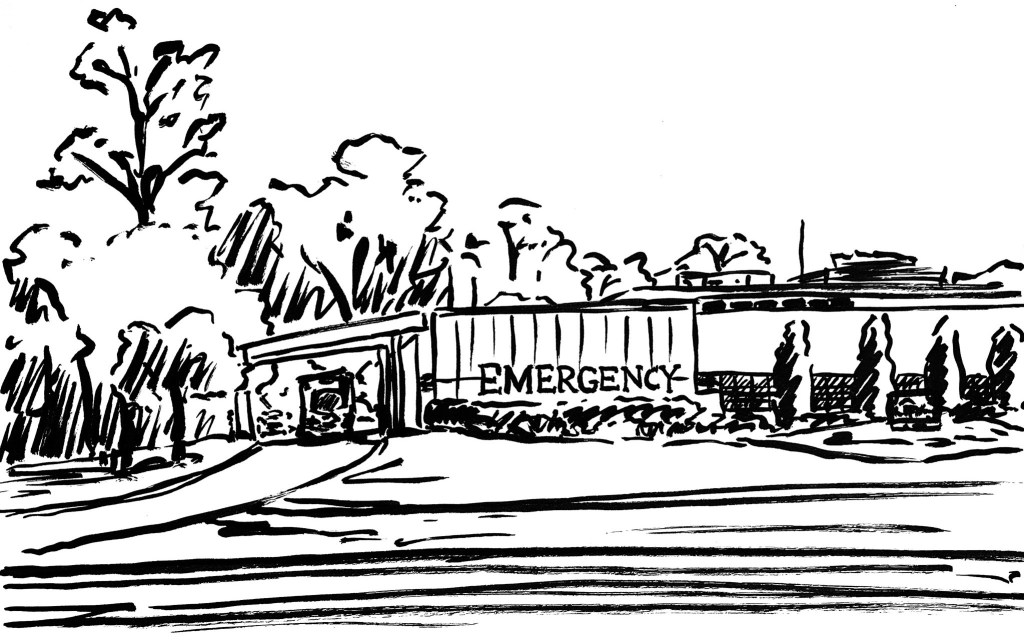
Exactly one year ago, today, I was admitted to the UF Health Shands hospital via the emergency room at Kanapaha. I had no neutrophils in my blood at that time, an active infection, fever, rash, and dropping cell lines across the board. The following weeks were fraught with worry. Worry that I was facing imminent death. Worry about what life would look like if I did make it through. Worry about what would my condition mean for my family—especially the side I’d so recently married into. Worry that I wouldn’t finish my grading and comments for my students in Greece. On June 5th, as the sun was setting, I was discharged. Since then, I’ve spent much of my time in and out of phlebotomy laboratories, clinics, and online support groups.
Today, I am miraculously healthy-ish. I am off any active treatment regimen for the as-yet-unnamed bone marrow failure condition. Yesterday I climbed sixty two boulder problems during Brent and Feibai’s visit, having found a good balance of difficulty (not very) and volume (higher than before the acute hospitalizations, even). I have my energy back, mostly. I’m cooking most of our meals again. Performing guitar and voice. Drawing outside. Dreaming of travel. Completing projects. Aside from a nagging sinus infection (likely) over the last two weeks and a nagging concern that my health will (like so many times before) take a sudden dive, I am as healthy as I’ve ever been.
Health—names are nice, but unnecessary
Shortly after my last email, I took a trip to see the medical experts at UVA Health in Charlottesville, VA and the National Institute of Health in Bethesda, MA. We used this trip as an excuse to see old friends and do some sightseeing. It was a wonderful way to see people, some of whom I hadn’t seen in a decade or longer.
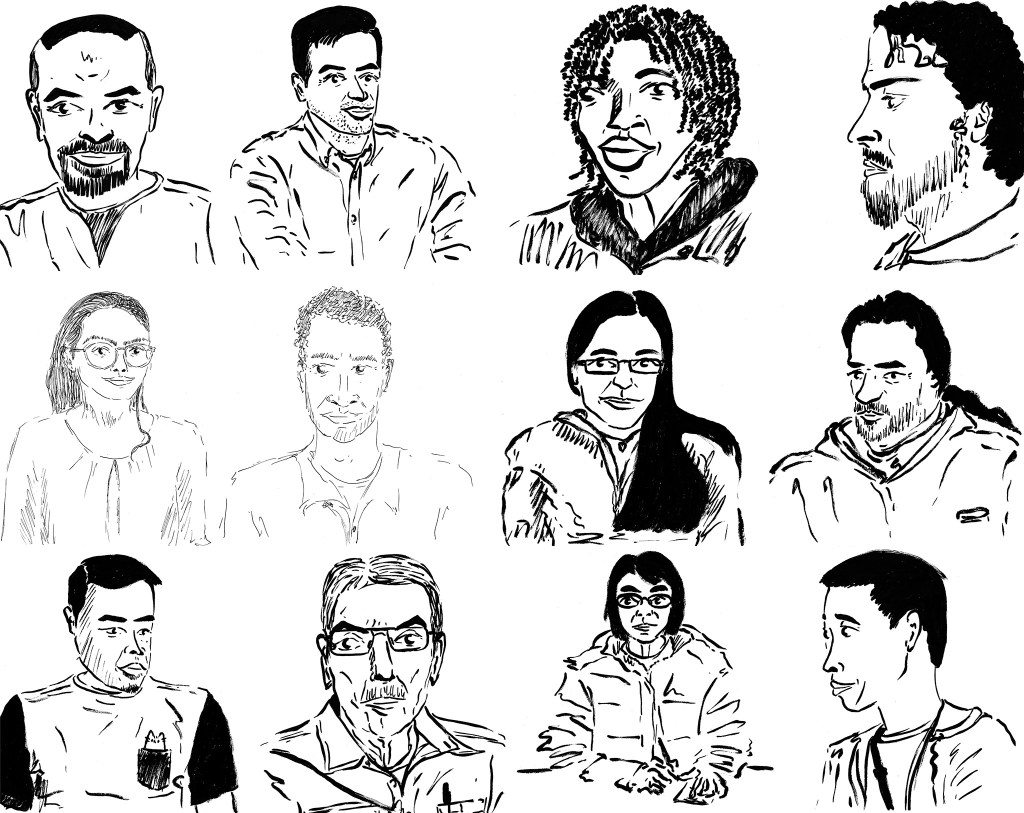
As you know, my working diagnosis keeps changing. I’m back in limbo, but it’s a pretty comfortable one. In Oman I was diagnosed with an aplastic crisis and possible HIV-negative AIDS. This was revised to possible cyclic neutropenia on my return to the states. Then severe idiopathic aplastic anemia in Florida, exactly one year ago. My visit to the National Institute of Health in August yielded a new diagnosis in large granular lymphocyte leukemia. It was due to this diagnosis that I traveled to the University of Virginia on a travel grant to see Dr. Loughran, the physician who discovered and remains the expert on the disease. The specialized tests at his LGL-L clinic definitively showed that I do not qualify as having LGL-L. The once clonal population of bad white blood cells in my blood and marrow are no longer detected. Yet, to quote his email to me “the situation remains confusing” due to the high population of a specific kind of white blood cell, the γδ (gamma-delta). To illustrate this confusion quickly, a median individual would have 63 γδ T-cells. Someone who qualifies as having LGL-L by the clinical definition has more than 500. I have 471.
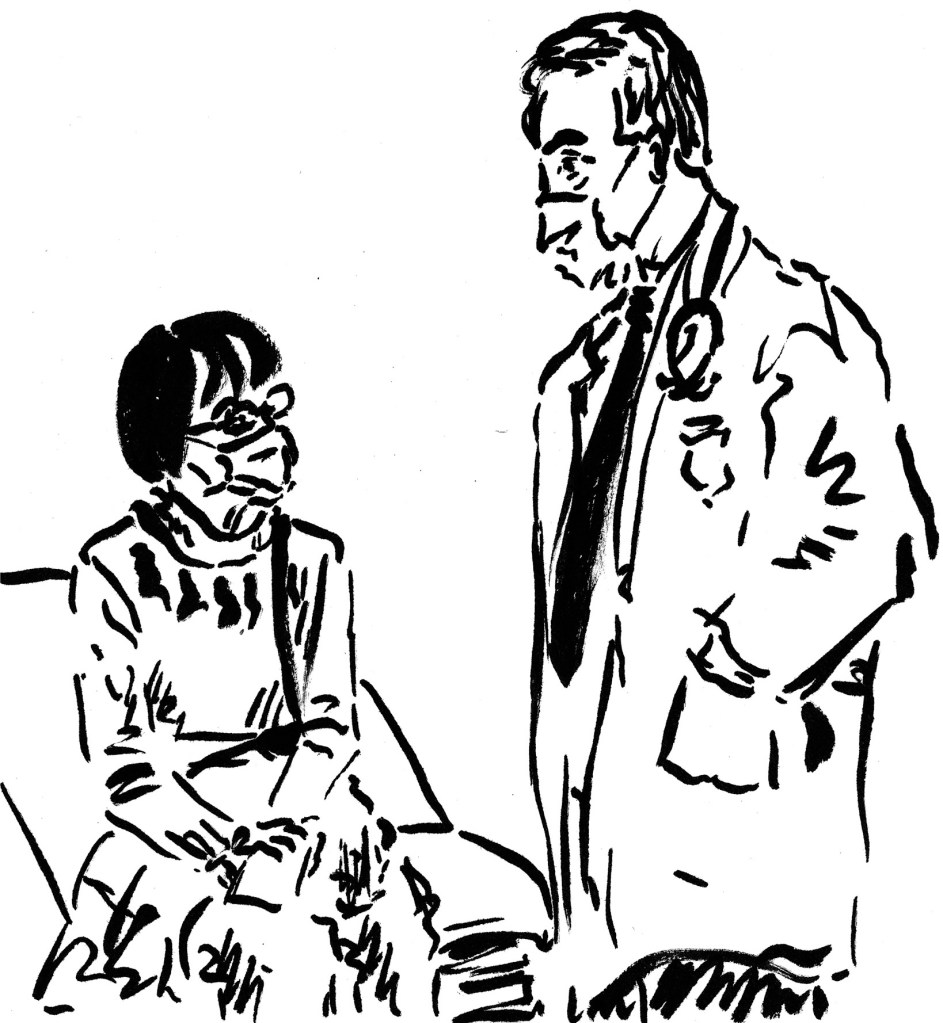
We continued from Charlottesville to Bethesda to see Dr. Holland at the National Institute of Health. Naturally, Dr. Holland and Dr. Loughran know each other and have talked about my case. Dr. Holland and his team exemplify the amazing humanity of the NIH—they simply want to help me, even though my condition isn’t strictly within their purview. Through their efficacy and concern, we sat for a compassionate two hour long appointment. Dr. Holland was frank about his confusion, while stressing that I shouldn’t wait for some definitive diagnosis. “Medicine likes to have specific names for things,” he said, “but a lot of the time human bodies don’t fit nicely into these names.” Much of the conversation was spent allaying our worries, telling me to live my life with this gift of unexplained recovery. Brent likened it to palliative care, but I’ve come to see it as more wisdom than that now. Afterwards, I arranged a bone marrow biopsy and skin punch biopsy for the following day.
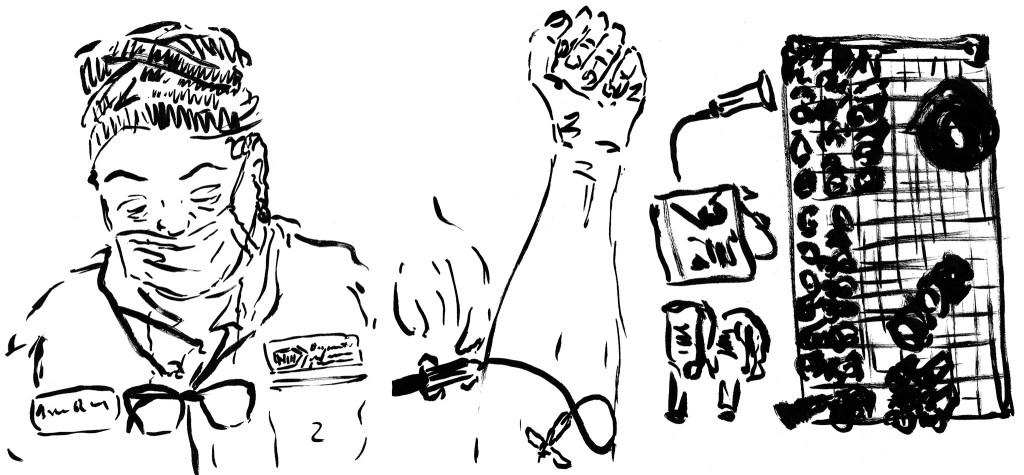
A variant of a specific gene, RUNX1, was discovered during the course of my genome sequencing. This prompted adding me to yet another study at the NIH. Hilariously, the lead doctor on this study came to see me while my bone marrow biopsy was in progress. This was quite the blessing. The distraction of trying to keep up with her highly technical explanation delivered with the now familiar palpable excitement I expect from doctors helped the discomfort of the biopsies pass quicker. Dr. Cunningham happily explained the origin of the name of the gene (from the runts of flies), and I connected on this point, mentioning my mother’s extensive experience with drosophila, just as the needle was being drilled into my hip for the aspirate. I remember the conversation with quite startling clarity, actually. I wonder if the pain amplified the clarity or if it was the attempt to focus on the words to avoid that pain. At any rate, since coming home, I met with NIH multiple times via telehealth appointment, with the most recent one last week. No “smoking guns” emerged from these studies. Nothing causal, no explanations—the same theories from before even my hospitalization. My RUNX1 variation, while significant as compared to the general American testing pool, is less interesting in an East Asian context, and likely indicates little. Dr. Holland did reassure Brent by saying that my genome is now sequenced such that any new findings on variations can be referenced against mine. So maybe there’s an answer in the future.
The past two weeks have been a bit scarier, as they’ve been the first time I’ve felt an illness since being discharged a year ago. It seems to have been a sinus infection that my immune system successfully fought off. And perhaps too enthusiastically, as that system is newly unfettered from the bonds of cyclosporine and possibly going nuts in excitement, attacking the Florida ambient allergens with unusual abandon (Dr. Holland’s theory last week). Initially, I felt strangely terrified by this, having become accustomed to not being sick due to my relative isolation this year (especially as compared to previous years, wherein I fell ill with shocking regularity). Now, I feel that this served as a lovely reassurance of my body’s ability to defend itself. Whether this is indicative of the future is anyone’s guess. Dr. Holland has a moderate worry that my blood counts could crash precipitously again without a proximate cause, but at this point, my clinical recommendation seems to mostly be “head in the sand”, which I’m alright with.
The Travelling Canary in Alachua County
So I’m not sure what these email updates will serve as. Perhaps I am confusingly cured for now, armed with more knowledge about the likely recurrence of a bone marrow failure and what sorts of things to do when that happens. Do you want me to continue sending life updates as the health information hopefully diminishes? Do you enjoy hearing about my life regardless? Or should I start a different chain for different purposes? Please let me know. Brent is worried that I’m wearing the patience of my friends compassion thin when I write about my artistic and GGIC endeavours—things that aren’t strictly related to my physical well-being.
For this email, at least, I’ll keep everything together. I’m really proud to announce my book of drawing of Alachua County, which I’ve titled The Travelling Canary in Alachua County after Chiang Yee’s moniker. The indiegogo for my book started today, with a primary purpose of ascertaining how many copies to print. It will run until June 5th, thereby coinciding with the time I spent in the hospital last year. I think it’s a valuable, cool thing. I hope you do too. I think it would be a nice browse for my friends as it has some memoir elements. If you like it, please share it with your circles, especially those with any connection to Alachua County/Gainesville. Religious groups, student groups, friends, social clubs, foodie groups, what have you. After the campaign, the book will grace the shelves of many stores around town. I hope this will be the first of many books in this series. Next would be either The Travelling Canary in Islamic Architecture/The Travelling Canary in Istanbul, or The Travelling Canary in 100 Places. I am also writing The Travelling Canary in Hospitals Abroad or some such. What do you think—should I split my medical experiences by location and serialize them or collect them all together into a single volume? Which would be more useful? I lean towards the latter for the comparative medicine possibilities.

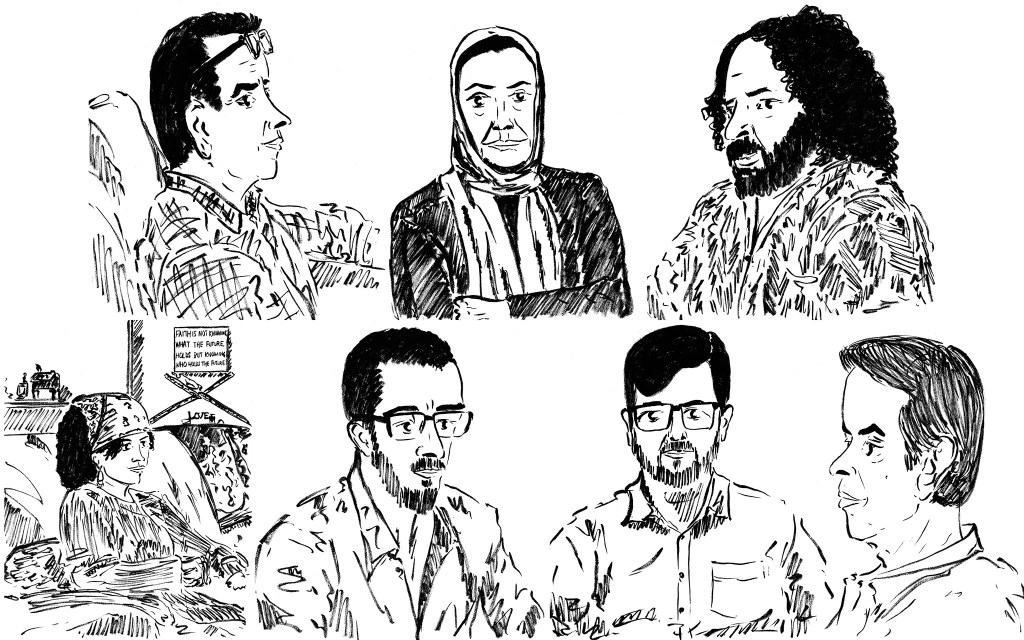
Oh, and I’ve also finally made a bit of a foray into merch-ifying my artwork on mugs and sketchbooks. I printed mugs with my drawing of the members of the Aplastic Anemia Support Group and sent them to those who wanted them. They were well received and that impelled me to try and make more. The whole experience of making a proper book and merch has been extraordinarily valuable. I feel like I’m fulfilling a bit more of what I used to write in teaching position cover letters—”I always admired those teachers of mine who’d seen somethingoftheworld, or lived other professional lives before their careers as a teacher.”—for the event that I return to teaching when I feel safe to. So many small businesses are closing, changing, or opening in Gainesville recently. I’ve chatted with many of these people, and it seems a big factor is a lag in price perception as compared to reality. $20 still feels like a lot of money. But where it used to feed two at a local restaurant, now it feeds one.
Mr. Rogers, music, travel
Last month, Qianqian, Brent, Feibai, and I attended events for the Mr. Rogers Week of Kindness in Winter Park. What an absolutely lovely person to celebrate. Mr Rogers is my hero—from childhood until now. Through this week of stories about him, told by the producers of the show and others associated with it, I learned just how deeply his life and philosophy has influenced mine. More than I’d realized, certainly. We met Mr. McFeely (Dave Newell), and his story of connecting the Neighborhood with Спокойной ночи, малыши!, a television program for Soviet children, made me wonder if my own abiding interest in the second world stems from the values Mr. Rogers instilled in me, values which took us both to Russia. Mr. Rogers visited Moscow with Daniel Tiger as a citizen diplomat, much as I did in my own small way when I visited Novorossiysk with Zebra. Daniel Tiger chatted with Хрюша. Zebra played with Чебурашка. The penultimate event of the week of kindness consisted of a concert of Mr. Rogers music. We were all struck by how similar his songs are to my own, especially his lyrics. The opera he wrote while a student at Rollins, Josephine the Short-Neck Giraffe predicts my songs Big & Grey, Henry the Loch Ness Turtle, and Bird or Beast. I owe even more of an enormous debt to this wonderful man than I had consciously been aware of before.

This week inspired me to perform again. I sang two sets during GGIC’s Earth Day Festival in our city’s main square, Bo Diddley Plaza. First, a set of songs from children’s song album Angibles, then a set of the foreign songs I learned for Appropriate. I even printed out copies of the liner notes that I created with QR codes to download links (in lieu of CDs) to impel myself to keep performing so as to sell them. I’ve since performed at two open mics, and plan to go to more. Perhaps even tonight!
In the last few months, I noticed that I’ve been spending time logging my travels, memorizing places on maps, creating lists of places to see, and eagerly offering to give travel recommendations to everyone. Climbers headed to Yosemite, students off to Istanbul or Japan, my Yale mentee’s trip to Patagonia, friends going to Chicago or DC, and even my mother on her adventures in China. I only identified last week that this is my way of mourning my life before. I think it’s a healthy method, though, and hopefully appreciated, so if you’re headed anywhere I’ve been and want some thoughts, I would be rather thrilled to oblige. Dr. Holland thinks I should hold tight for at least another month off the cyclosporine, then remain close to good healthcare if I do travel.
GGIC & IRC
A very quick update concerning the Greater Gainesville International Center: it has been approved by the International Rescue Committee, finally, to be an affiliate to settle refugees here in Gainesville. It’s extraordinary but also daunting. GGIC cannot fail now, because the lives and livelihoods of refugees depend upon it. While this approval does come with grant money, it’s not nearly enough to cover even operating costs. I am cautiously hopeful that this development will galvanize local people and organizations to donate, though. It should also qualify GGIC for grants, and perhaps most importantly—Zakat donations.
Returning recommendations
Thank you to everyone who has furnished me with recommendations during my illness. I think I’ve read/watched/listened to/reserved most of them now. In that spirit, here are my own recommendations from the last few months.
- Book: Troubled by Rob Henderson
- Film: Ethel & Ernest
- Artbook: The Silent Traveller in Boston by Chiang Yee (fun fact, he was the one who coined 可口可樂)
- Restaurant: Flatfish Doughnuts
- Travel destination: Istanbul
- Musician: Khruangbin
- Independent Musician: Meep Moop
- Song/Mantra: Om Tare Tuttare Ture Svaha
- Local musician: Kyle Keller
- Local artist: Gary Borse
- Graphic Novel: Footnotes in Gaza by Joe Sacco
Maybe, one day, one of my own books will be on someone’s list of recommendations!

 Mr. Ho travels